The Method
What is Afferentology?
Most chronic pain and injury involves disrupted afferent input — abnormal sensory signals that alter muscle tone, compromise joint stability, and prevent full recovery. Afferentology gives you the tools to identify and correct it, whatever your primary technique.
It is not a replacement for what you already do. It is a layer of precision that makes you more effective — and gives you a repeatable, objective outcome you can both see and feel.
Afferentology was developed to address a gap that most manual therapists recognise: patients who plateau, who respond inconsistently, or whose pain persists beyond what the structural findings suggest. By assessing the afferent system directly — testing muscle tone as a proxy for neurological load — you can identify the inputs driving that pattern and address them specifically.
The broader Afferentology curriculum, research, and practitioner directory are maintained at afferentology.org. I am one of three certified instructors.
An Objective Outcome Measure
Find and track abnormal muscle tone before and after every intervention. Demonstrate change you can both see and measure.
Integrate Wider Factors
Environmental, nutritional, and sensory inputs all affect afferent load. Learn to identify which factors are driving your patient's presentation.
Amplify What You Already Do
Afferentology is technique-agnostic. Whether you adjust, mobilise, or use soft tissue work — this framework makes your existing skills safer and more targeted.
Audience
Who These Training Days Are For
Training is aimed at practising clinicians. No prior Afferentology experience or muscle testing is required — only a desire to get quick and long-lasting results for your patients.
- Chiropractors (DC) at any stage of practice
- Osteopaths and manual therapists
- Physiotherapists with an interest in neurology-informed practice
- Clinicians who have attended an Afferentology seminar and want hands-on consolidation
- Those seeking CPD with immediate clinical application
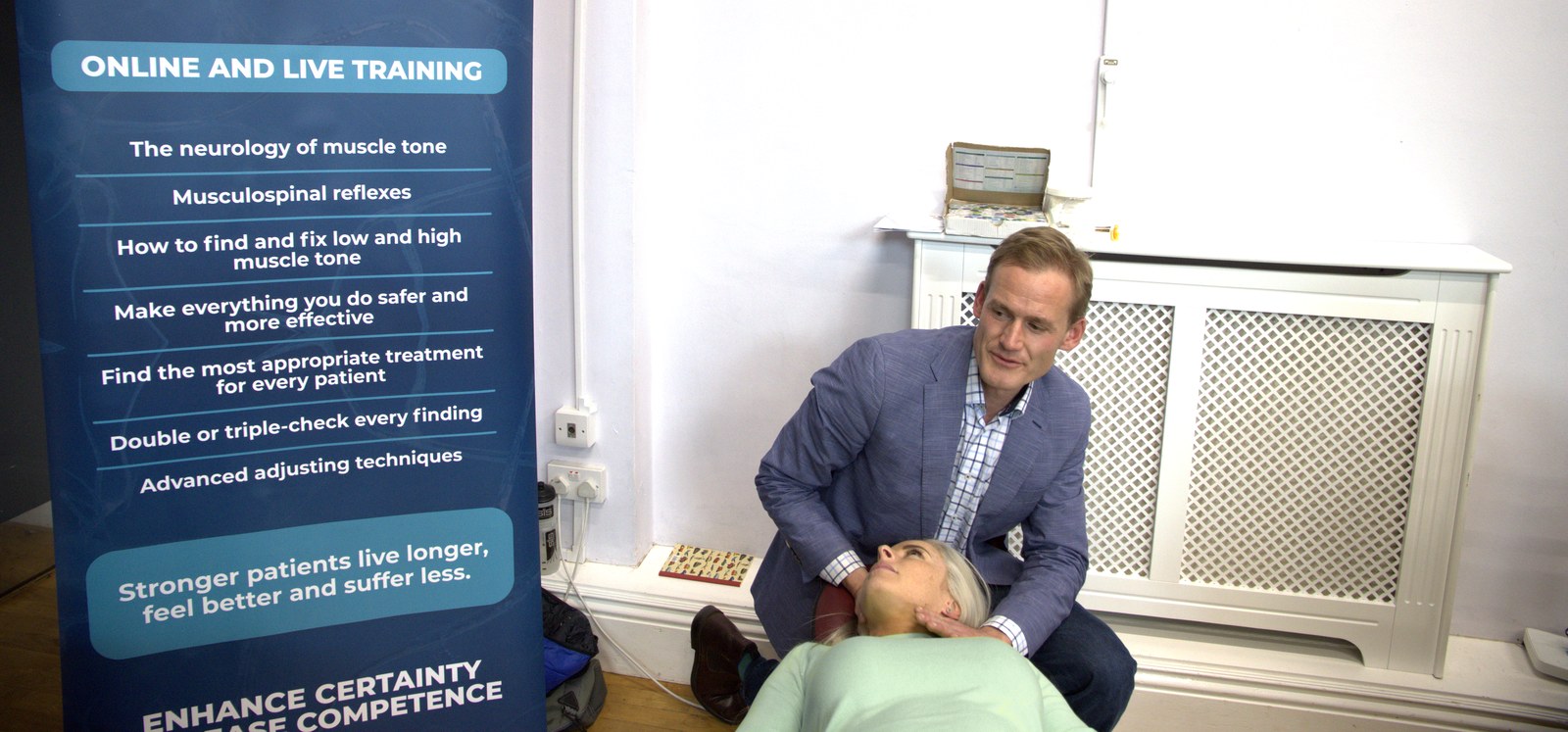
Training Days
Upcoming Dates
All training days are small-group — typically up to 15 participants — allowing for hands-on practice and direct feedback. The day covers assessment, correction, and case discussion throughout.
Afferentology Seminar
Full two-day seminar — details tbc at afferentology.org.
TBC
In-Clinic Training Day — Surrey
Weybridge — small-group, hands-on day. Join the list below to be notified when confirmed.
TBC
In-Clinic Training Day — Cornwall
Cornwall — small-group, hands-on day. Join the list below to be notified when confirmed.

The Instructor
About Patrick Thomas
I have been in clinical practice as a Doctor of Chiropractic since graduating from AECC University College (now HSU) in 2010. My principal clinic is The AIM Clinic in Bordon, Hampshire; I also practise at a clinic in Petworth, West Sussex.
My clinical approach is grounded in a detailed understanding of how the nervous system shapes pain, movement, and recovery — treating what hurts, while addressing the afferent environment that drives the presentation. Afferentology gave me a framework to do that systematically, and I became an instructor to pass that on.
I am one of three certified Afferentology instructors. I have taught small groups at the British Chiropractic Association (BCA) sports trips, the McTimoney Chiropractic Association annual conference, and run in-clinic training days for practising clinicians across the UK.
Stay Informed
Join the Training List
Dates for the Weybridge and Cornwall training days will be announced by email first. Places are limited to 15 — joining the list is the best way to secure your spot. No regular newsletter. I write only when there is something worth telling you.
Your details are used only to notify you about training events. Unsubscribe at any time.
Get in Touch
Direct Enquiries
If you have a specific question about the training, want to discuss hosting a group day at your clinic, or are interested in one-to-one mentoring, please get in touch directly.